Introduction
Not long ago, ranking on Google mainly meant optimizing keywords, building backlinks, and improving technical SEO. Today, users are increasingly getting answers directly from AI systems like OpenAI ChatGPT, Google Gemini, and AI-generated search experiences powered by modern AI-powered search engines.
This shift has introduced a completely new approach called Generative Engine Optimization.
Instead of optimizing only for search engine rankings, businesses now need to optimize for AI-generated answers, conversational search experiences, and contextual content visibility. Whether users search through Google AI Overviews, Bing AI, ChatGPT, or voice assistants, the goal is becoming the same: provide the most relevant and trustworthy answer instantly.
That’s why Generative Engine Optimization is becoming one of the most important digital marketing strategies for businesses in 2026 and beyond.
Brands that adapt early will gain stronger AI content visibility, improved authority, and more opportunities to appear inside AI-generated responses. Businesses that ignore this shift may slowly lose visibility even if their traditional rankings remain stable.
In this guide, you’ll learn how GEO SEO, AI search optimization, and modern AI SEO strategies are reshaping the future of digital visibility.
What Is Generative Engine Optimization?
Generative Engine Optimization is the process of optimizing website content so it can appear inside AI-generated search results and conversational search experiences.
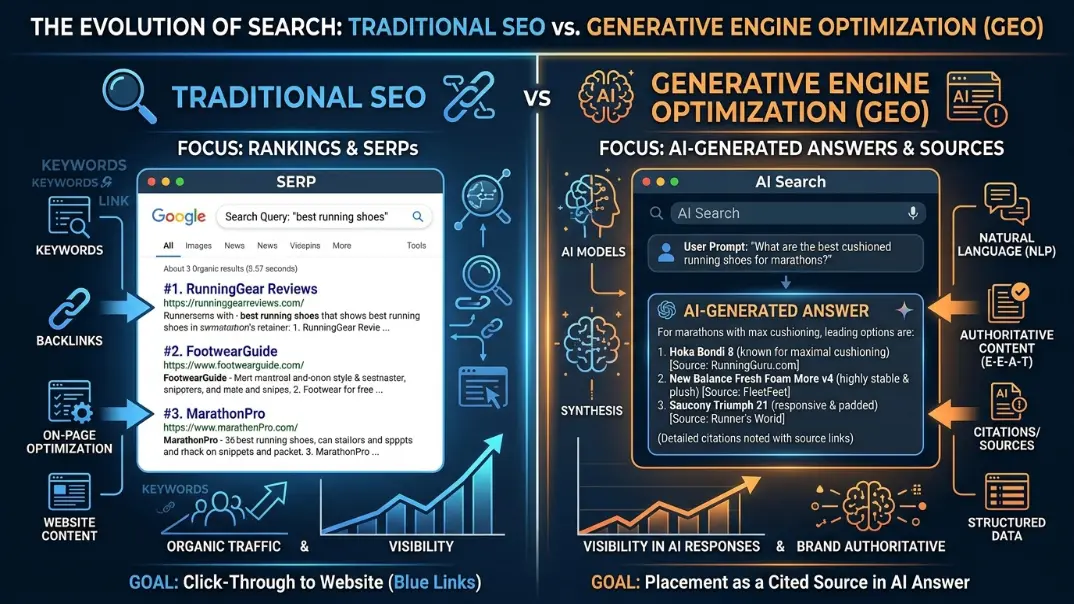
Traditional SEO focuses mainly on ranking webpages in search engine results pages (SERPs). In contrast, GEO SEO focuses on helping AI systems understand, trust, and reference your content when generating answers.
This matters because users increasingly search differently.
Instead of typing:
“best SEO agency”
Users now ask:
“What’s the best SEO agency for small businesses in Australia?”
Modern generative AI search systems analyze context, intent, authority, and semantic relevance before producing responses. These systems don’t simply list websites — they generate synthesized answers using information gathered from multiple trusted sources.
That changes everything about optimization.
Traditional SEO vs GEO SEO
Traditional SEO focuses on:
- Rankings
- Click-through rates
- Backlinks
- Metadata
- Keywords
Meanwhile, Generative Engine Optimization focuses on:
- AI answer visibility
- Contextual relevance
- Entity authority
- Semantic relationships
- Trustworthiness
- Expert-driven content
This is why AI search optimization is now becoming essential for businesses that want long-term visibility.
How AI-Powered Search Engines Work
Modern AI-powered search engines use large language models, machine learning, semantic analysis, and user intent prediction to generate intelligent answers.
Unlike traditional search engines that mainly return webpage links, AI systems attempt to provide direct answers.
Google AI Overviews
Google Search Central now increasingly shows AI-generated summaries at the top of search results.
These AI Overviews pull information from multiple trusted sources and summarize answers conversationally. That means your content may influence search visibility even when users never click your website directly.
This is one reason why search engine optimization AI concepts are evolving rapidly.
ChatGPT Search Behavior
Platforms like OpenAI are changing how users discover information.
Users now ask complete questions naturally:
- “What’s the best CRM for startups?”
- “How can I improve local SEO?”
- “What is Generative Engine Optimization?”
AI systems evaluate:
- Context
- Authority
- Readability
- Relevance
- Expertise
- Semantic consistency
That’s where advanced AI SEO strategies become important.

Gemini and Generative AI Search
Google AI Documentation and Gemini rely heavily on contextual understanding.
Modern generative AI search systems prioritize:
- Helpful content
- Entity relationships
- Conversational structure
- Accurate information
- User-focused answers
This means websites optimized only for outdated keyword tactics may struggle in future AI-driven environments.
Why GEO SEO Is Important for Businesses
The rise of AI-generated search results is already changing user behavior.
People increasingly trust summarized AI answers instead of browsing multiple websites. As a result, businesses need stronger AI content visibility to remain discoverable.
Increased Visibility in AI Answers
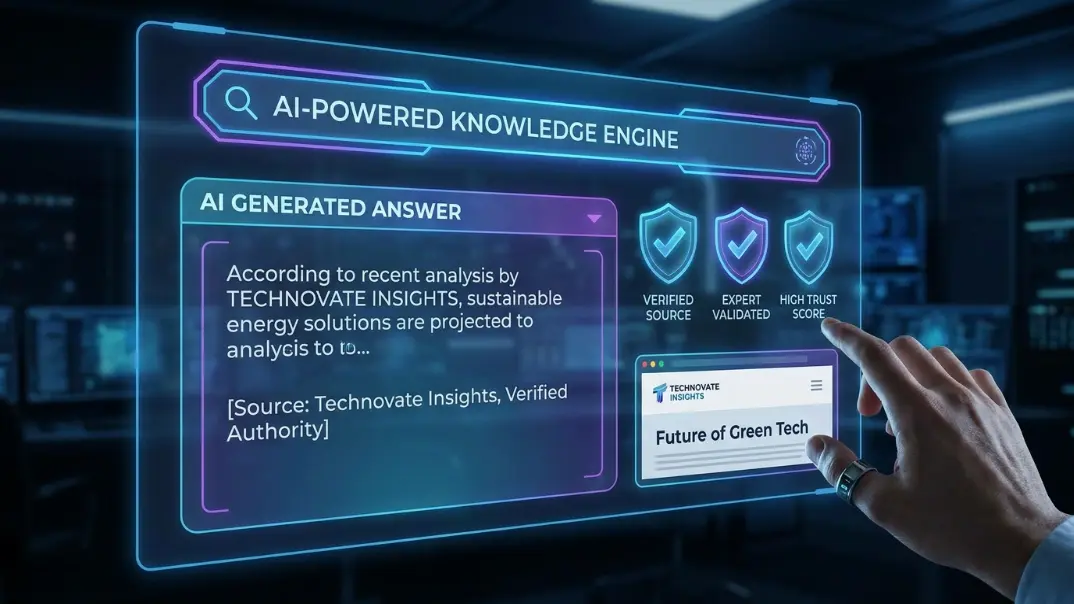
When your content is optimized for Generative Engine Optimization, AI systems are more likely to cite or reference your website.
That creates:
- More brand exposure
- Higher authority
- Increased trust
- Better organic reach
Even without direct clicks, appearing inside AI-generated answers strengthens brand recognition.
Brand Authority Matters More
Modern AI-powered search engines prioritize authoritative brands.
Businesses with:
- Expert-written content
- Strong topical authority
- Trusted backlinks
- Consistent entity signals
are more likely to appear in AI-generated results.
This is why GEO SEO is becoming closely connected to EEAT principles.
Organic Traffic Is Changing
Traditional SEO focused heavily on clicks.
But today, zero-click searches are growing rapidly.
AI systems now answer many questions directly inside search interfaces. Businesses must therefore optimize not only for clicks but also for AI citations and mentions.
That’s where AI search optimization becomes essential.
User Behavior Is Evolving
Search behavior now looks conversational.
People increasingly use:
- Voice search
- AI assistants
- Chat-based search
- Natural language queries
Businesses using advanced AI SEO strategies can adapt faster to these behavioral changes.
Traditional SEO vs Generative Engine Optimization
| Traditional SEO | GEO SEO |
| Keyword rankings | AI answer visibility |
| SERP clicks | AI citations |
| Backlinks | Entity authority |
| Meta optimization | Context optimization |
| Search snippets | Conversational answers |
| Keyword density | Semantic relevance |
| Webpage indexing | AI comprehension |
Keyword Rankings vs AI Visibility
Traditional SEO prioritizes search rankings.
Meanwhile, Generative Engine Optimization focuses on whether AI systems can understand and trust your content enough to reference it.
SERP Clicks vs AI Citations
Classic SEO success relied on traffic.
Now, appearing in AI-generated summaries can influence purchasing decisions even without clicks.
Backlinks vs Entity Authority
Backlinks still matter, but modern search engine optimization AI strategies also prioritize entity recognition, brand authority, and expertise signals.
Meta Optimization vs Context Optimization
Traditional metadata still helps.
However, AI systems now analyze deeper contextual meaning, semantic relevance, and topical completeness.
Best Generative Engine Optimization Strategies
Content Quality
High-quality content remains the foundation of effective Generative Engine Optimization.
AI systems prioritize:
- Helpful content
- Clear explanations
- Expert insights
- Original perspectives
Thin content rarely performs well in modern AI-powered search engines.
Example
Instead of writing:
“SEO is important.”
Write:
“SEO helps businesses improve search visibility, attract qualified traffic, and build long-term digital authority.”
Specificity improves relevance.
Entity-Based SEO
Entities help AI systems understand relationships between topics, brands, and concepts.
For example:
- SEO
- Digital marketing
- AI search
are connected entities.
Strong GEO SEO strategies include:
- Brand consistency
- Structured author profiles
- Clear topical relevance
- Internal linking
EEAT Optimization
Google increasingly prioritizes:
- Experience
- Expertise
- Authoritativeness
- Trustworthiness
Strong EEAT signals improve both traditional SEO and AI search optimization.
Ways to improve EEAT:
- Add expert authors
- Include real examples
- Showcase case studies
- Use trustworthy references
Structured Data
Schema markup helps AI systems interpret content more effectively.
Important schema types include:
- FAQ schema
- Organization schema
- Article schema
- Local business schema
Structured data improves AI content visibility across search platforms.
Conversational Content
Modern generative AI search systems understand natural language.
Content should therefore sound conversational while remaining informative.
Instead of robotic phrasing, answer questions naturally.
Example
Poor:
“SEO optimization ranking services best practices.”
Better:
“How can businesses improve SEO rankings in AI-driven search environments?”
Semantic Search Optimization
Semantic SEO helps AI understand contextual meaning.
This includes:
- Related terms
- Topic clusters
- Search intent
- Contextual relevance
Strong semantic optimization strengthens search engine optimization AI performance.
Topical Authority
Publishing isolated articles is no longer enough.
Businesses should build complete topical ecosystems around subjects.
For example, an SEO agency could create content around:
- Technical SEO
- Local SEO
- AI SEO services
- Content marketing
- Link building
- GEO SEO
This strengthens authority signals for AI-powered search engines.
AI SEO Strategies
Modern AI SEO strategies combine traditional SEO with AI-focused optimization.
Successful approaches include:
- Optimizing conversational queries
- Improving semantic relevance
- Building authority
- Enhancing readability
- Creating comprehensive content
Businesses that integrate both approaches gain stronger visibility.
User Intent Optimization
AI systems prioritize user satisfaction.
That means content must align closely with intent.
Intent categories include:
- Informational
- Transactional
- Navigational
- Commercial investigation
Strong AI search optimization always starts with understanding user intent.
How to Optimize Content for AI Search Optimization
1. Research Conversational Keywords
Focus on natural language searches.
Examples:
- “What is Generative Engine Optimization?”
- “How does GEO SEO work?”
- “Best AI SEO strategies for businesses”
These align better with modern generative AI search behavior.
2. Build Topical Clusters
Create interconnected content around related subjects.
Example cluster:
- GEO SEO
- Technical SEO
- AI content visibility
- Semantic SEO
- AI search optimization
This improves topical authority.
3. Improve Authority Signals
Authority matters more than ever.
Improve authority through:
- Expert authors
- Citations
- Industry references
- Trustworthy backlinks
4. Add FAQs
FAQ sections improve:
- Readability
- User engagement
- Featured snippet opportunities
- AI comprehension
They also strengthen conversational optimization.
5. Use Schema Markup
Structured data improves AI understanding.
Recommended schema:
- FAQ
- Article
- Breadcrumb
- Organization
6. Improve Readability
Readable content performs better.
Best practices:
- Short paragraphs
- Clear headings
- Simple language
- Active voice
- Bullet points
7. Write Expert-Driven Content
AI systems increasingly prioritize expertise.
Avoid generic content.
Instead:
- Share practical insights
- Use examples
- Include data
- Provide actionable advice
Common SEO SEO Mistakes to Avoid
Thin AI-Generated Content
Mass-produced low-quality content rarely performs well.
AI systems increasingly detect shallow information.
Solution:
- Focus on originality
- Add expertise
- Include practical insights
Keyword Stuffing
Overusing keywords harms readability and trust.
Modern AI-powered search engines prioritize natural language and semantic relevance.
Ignoring User Intent
Some websites optimize only for traffic without solving user problems.
That approach no longer works effectively in Generative Engine Optimization.
Poor Website Structure
Confusing site architecture weakens AI comprehension.
Improve:
- Internal linking
- Navigation
- Content hierarchy
- Technical SEO
Lack of Authority
Without authority signals, AI systems may ignore your content.
Strengthen:
- Brand trust
- EEAT
- Expert contributions
- Reputation signals
No Semantic Optimization
Modern search engine optimization AI requires semantic relevance.
Content should include related concepts naturally.
Future of Generative Engine Optimization
The future of search will become increasingly AI-driven.
Zero-Click Search Growth
Users increasingly receive answers directly from AI interfaces.
This means businesses must optimize for visibility beyond traditional clicks.
Voice AI Search
Voice assistants continue growing rapidly.
Future AI search optimization will heavily prioritize conversational language.
Personalized AI Search
AI systems will increasingly personalize answers based on:
- Preferences
- Behavior
- Context
- Search history
This will reshape SEO strategies significantly.
AI-Driven Search Evolution
Modern AI-powered search engines are becoming more intelligent every year.
Future ranking factors may include:
- Trust signals
- Entity relationships
- Brand sentiment
- Expertise depth
The SEO Industry Will Evolve
SEO is not disappearing.
Instead, it is evolving into broader digital authority optimization.
Businesses investing in Generative Engine Optimization early will gain a long-term competitive advantage.

Conclusion
Search is entering a completely new era.
As AI-generated answers become more common, businesses can no longer rely only on traditional rankings. They must optimize for visibility inside AI-generated search experiences.
That’s exactly why Generative Engine Optimization matters.
Strong GEO SEO strategies help businesses improve authority, strengthen AI content visibility, and remain competitive across modern AI-powered search engines.
Brands that focus on helpful content, semantic relevance, EEAT, and conversational optimization will be far better positioned for the future of search.
Whether you’re investing in SEO services, technical SEO, content marketing, or advanced AI SEO strategies, adapting to AI-driven search today can create major long-term growth opportunities.
The future of search is already here — and businesses that embrace AI search optimization now will lead the next generation of digital visibility.
FAQs
What is Generative Engine Optimization?
Generative Engine Optimization is the process of optimizing content for AI-powered search engines and AI-generated search responses.
How is GEO different from SEO?
Traditional SEO focuses on rankings and clicks, while GEO SEO focuses on AI visibility, contextual relevance, and AI citations.
Why is AI search optimization important?
AI search optimization helps businesses appear in AI-generated answers, improving authority and visibility.
Can GEO SEO improve rankings?
Yes, strong Generative Engine Optimization practices can improve both traditional search performance and AI visibility.
What are AI-powered search engines?
AI-powered search engines use artificial intelligence to generate conversational answers instead of only listing webpages.
Is GEO the future of SEO?
Yes, GEO SEO is becoming a major part of future SEO strategies as AI-driven search continues evolving.