Running a business without digital marketing services today is like opening a shop and forgetting to put up a signboard. People are searching for exactly what you offer — right now, on Google, on social media, on YouTube — and if your brand isn’t showing up, someone else is taking that customer.
The good news? You don’t need a massive budget or a full in-house team to make online marketing work for your business. What you need is clarity—understanding the full breakdown of what each service actually does and in what order to use them.
Whether you’re a startup trying to get your first 100 customers or an established brand looking to scale, this breakdown of digital marketing services will help you make smarter decisions, spend your budget where it counts, and build something that grows over time.
Table of Contents
- What Are Digital Marketing Services?
- Why SEO Services Are the Foundation of Everything
- PPC Advertising — When You Need Results Now
- Content Marketing Strategy That Builds Trust
- Local SEO — How to Win Your City First
- How to Choose the Right Digital Marketing Partner
- Final Thoughts
What Are Digital Marketing Services?
Most business owners hear “digital marketing services” and picture social media posts or maybe a few Google ads. The reality is far broader — and far more powerful — than that.
Digital marketing services is an umbrella term for every strategy and channel a business uses to grow its visibility, traffic, and revenue online. That includes search engine optimisation, pay-per-click advertising, content creation, social media management, email campaigns, conversion rate optimisation, and more. Each of these serves a different purpose, and the best results come when they work together as a system rather than in isolation.
Think of it this way. A restaurant in India running Google Ads to attract lunch crowds is using a completely different approach than a SaaS company running LinkedIn thought-leadership content to book demos. Both are using digital marketing services — but the mix, the timing, and the goals look nothing alike. That’s why a cookie-cutter approach rarely works. What you need is a strategy built around your business model, your audience, and where they actually spend their time online.
The Core Pillars Every Business Should Know
When you invest in digital marketing services, you’re typically working across some combination of these core areas:
Search — Getting found on Google organically (SEO) or through paid ads (PPC)
Content — Building trust through blog posts, videos, guides, and case studies
Social — Engaging audiences on platforms like Instagram, LinkedIn, and YouTube
Email — Nurturing leads and retaining customers through direct communication
Analytics — Measuring everything so you know what’s actually working
Most businesses don’t need all of these at once. But understanding each one helps you decide where to start — and that decision matters more than most people realise.
Why SEO Services Are the Foundation of Everything
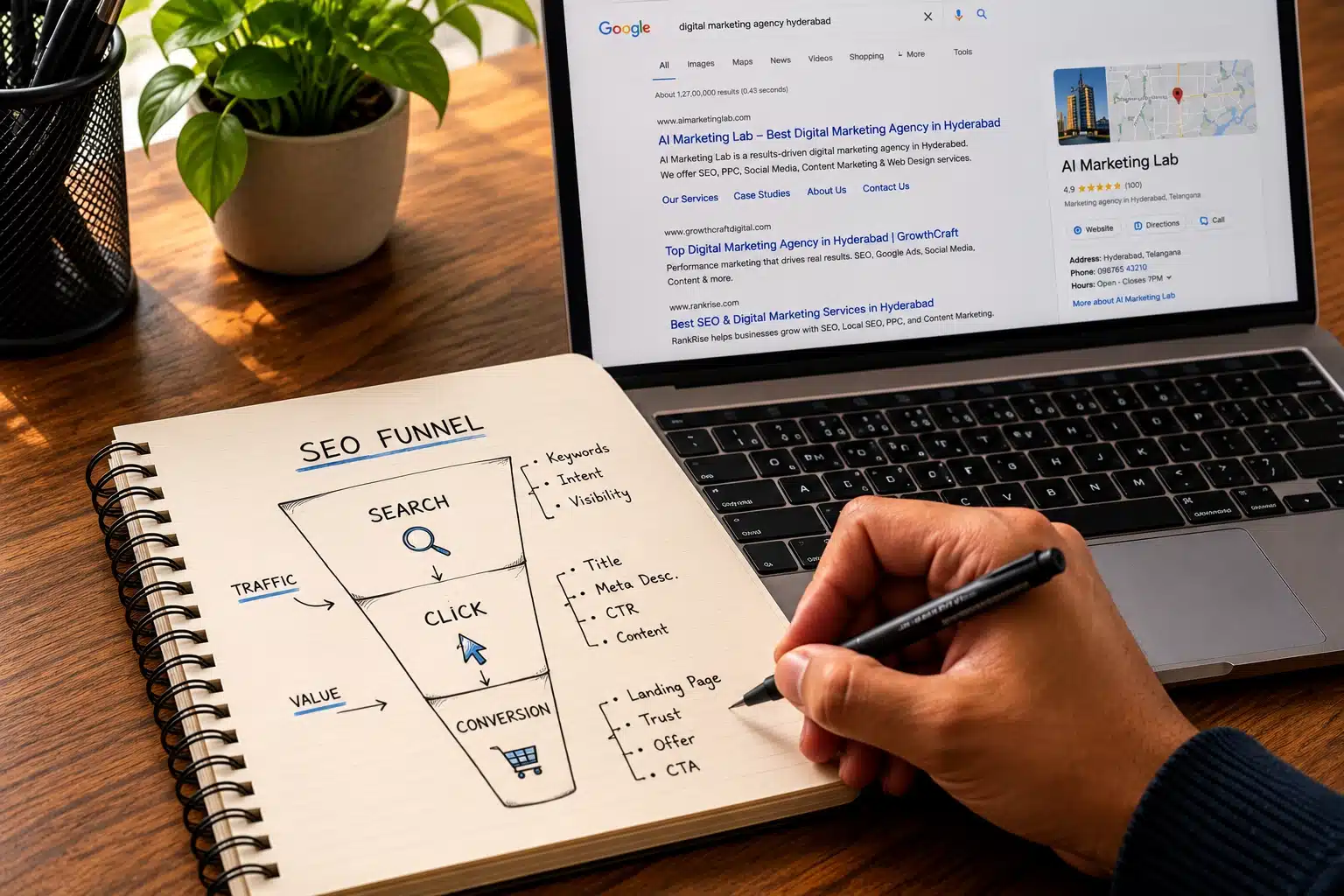
If you’ve ever asked a digital marketing agency where to begin, the answer is almost always the same: start with SEO services. And there’s a good reason for that.
SEO services — which stands for search engine optimisation — is the process of making your website more visible on Google and other search engines without paying for every click. When done properly, it creates a compounding effect. A blog post you publish today could bring you traffic for the next three years. A page you optimise this month could rank above your biggest competitor by next quarter. That’s the kind of ROI that paid advertising simply can’t replicate on its own.
The businesses that invest early in SEO services tend to become the dominant players in their niche over time. The ones that skip it and rely solely on ads are essentially renting their traffic — the moment the budget dries up, the leads stop. SEO builds an asset. Ads buy a result.
Most businesses come to us after spending heavily on PPC campaigns with no organic fallback. When the ad spend gets cut — because it always does at some point — there’s nothing left catching the traffic. Building your search engine optimisation foundation first means you’re never entirely dependent on paid channels.
What Good Search Engine Optimization Actually Looks Like
Strong search engine optimisation isn’t just stuffing keywords into a page and hoping for the best. Modern SEO covers three distinct layers that all need attention:
On-Page SEO — This includes your page titles, headings, meta descriptions, keyword placement, internal linking, and content quality. Every page on your site should be built around a specific topic and answer real user questions clearly.
Technical SEO — This is what happens under the hood. Page speed, mobile responsiveness, crawlability, schema markup, and site architecture all affect how Google reads and ranks your pages. A beautiful website that loads slowly or has broken links will never rank where it should.
Off-Page SEO — This is largely about backlinks — other reputable websites linking to yours. Google treats these as votes of confidence. The more authoritative sites linking to you, the stronger your domain becomes over time.
When all three layers work together, SEO services deliver the kind of consistent, compounding website traffic that transforms a business’s online presence from invisible to unavoidable.
PPC Advertising — When You Need Results Now
There are times when waiting months for SEO to kick in simply isn’t an option. A new product launch. A seasonal campaign. A competitor aggressively taking market share. In those moments, PPC advertising is the tool that gets you in front of the right people immediately.
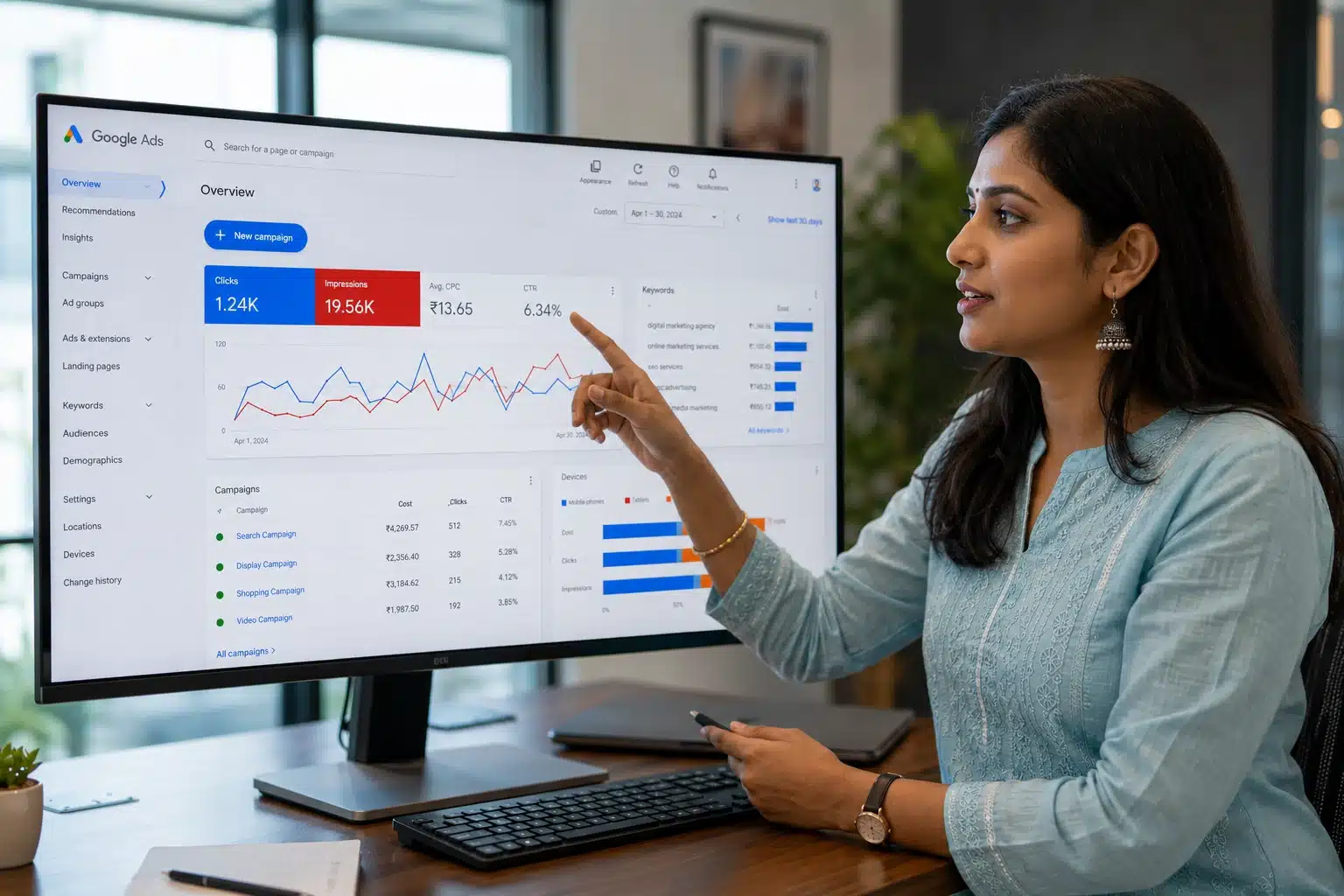
PPC advertising — pay-per-click — means you pay every time someone clicks your ad. These ads appear at the top of Google search results, on YouTube, on social media feeds, and across millions of websites in Google’s display network. Done right, PPC advertising puts your business in front of people who are actively searching for exactly what you offer — often within hours of launching a campaign.
But here’s what most agencies won’t tell you upfront: PPC advertising is not a magic switch. Without proper targeting, compelling ad copy, well-structured landing pages, and continuous optimisation, you’ll burn through budget fast and wonder why it isn’t converting. The click is the start of the journey, not the end of it. What happens after someone lands on your page matters just as much as getting them there.
How PPC and SEO Work Together
The smartest digital marketing services strategies don’t treat PPC and SEO as competitors — they use them as partners.
Think of it like this. While your search engine optimisation strategy is building momentum over the first few months, PPC advertising fills the gap and keeps leads flowing in. Once your organic rankings start climbing, you can pull back on paid spend for those keywords and redirect the budget toward new markets or higher-competition terms you’re still working to rank for organically.
PPC also gives you instant keyword data. You can test which messages convert, which audiences respond, and which product angles resonate — then feed all of that intelligence directly into your SEO and content strategy. It’s a two-way relationship, and businesses that understand this tend to grow significantly faster than those treating each channel as a separate silo.
Content Marketing Strategy That Builds Trust
There’s a reason the most successful brands online feel like they’re genuinely trying to help you rather than sell to you. That’s not an accident — it’s a content marketing strategy working exactly as intended.
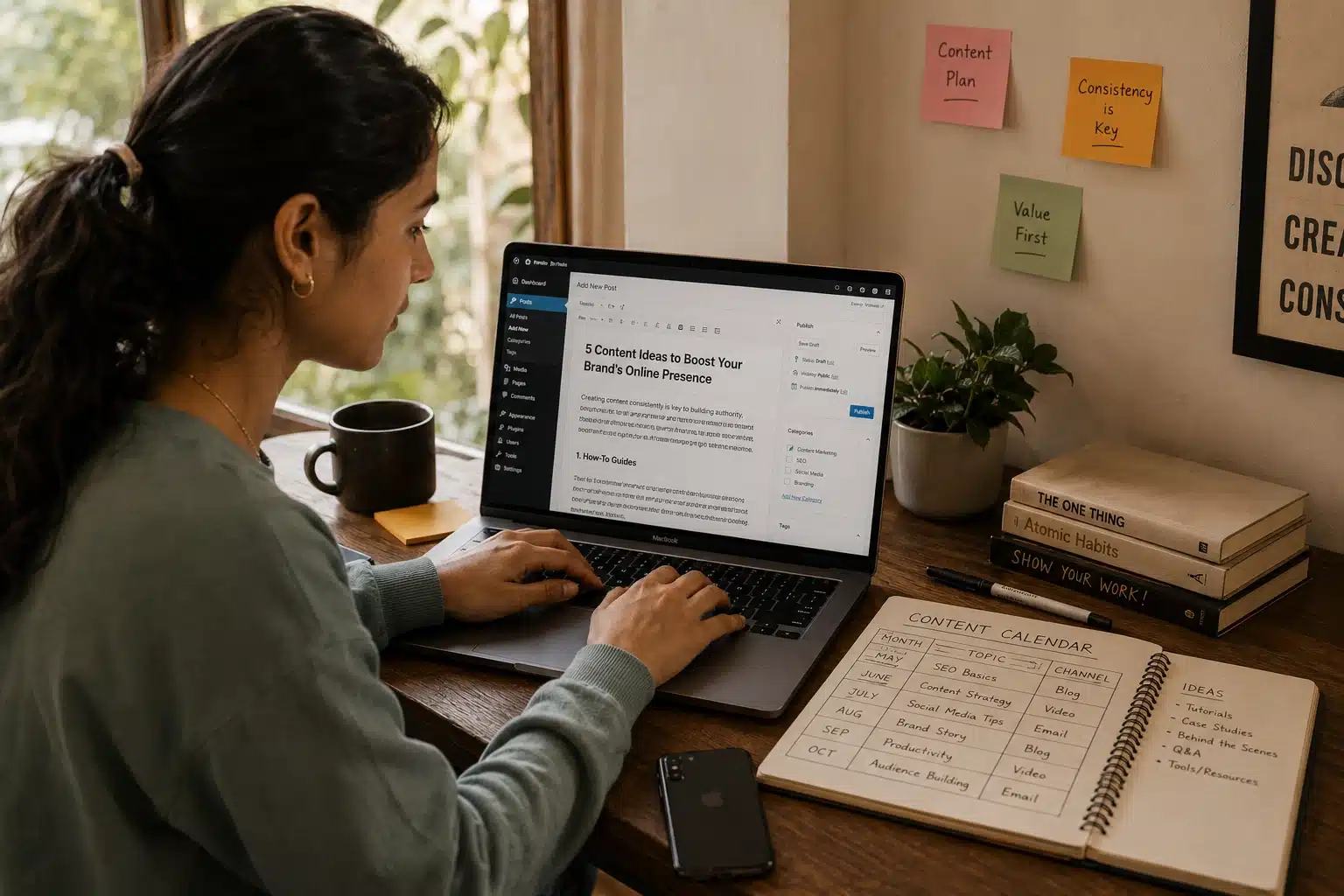
Content marketing strategy is the practice of creating and distributing valuable, relevant content to attract and convert a clearly defined audience. Blog posts, videos, case studies, white papers, email newsletters, LinkedIn articles — all of these are content. But without a deliberate strategy behind them, they’re just noise on the internet. What separates effective content from wasted effort is intentionality: knowing who you’re creating for, what questions they’re asking, and what action you want them to take after they’ve consumed it.
Here’s a real example of how powerful a solid content marketing strategy can be. A B2B logistics software company started publishing in-depth guides about freight management challenges, customs regulations, and warehouse automation. They didn’t run a single ad for the first six months. By month seven, their organic website traffic had tripled, their sales team was fielding calls from pre-educated prospects, and their cost per acquisition had dropped by almost 40%. The content did the selling before any salesperson got on a call.
That’s the compounding effect of online marketing built on genuine value.
Why Content Without Strategy Is Just Noise
Anyone can write a blog post. What most businesses get wrong is writing without a clear purpose tied to their buyer’s journey.
A strong content marketing strategy maps every piece of content to a specific stage — awareness, consideration, or decision. Someone who just discovered they have a problem needs different content than someone comparing your pricing against three competitors. Writing the same general blog post for both of them helps neither.
Good content also feeds every other channel. Your SEO services benefit because fresh, well-optimised content gives Google more pages to rank. Your social media gets shareable material. Your email campaigns get value to offer subscribers. Everything works better when content marketing strategy sits at the centre of your digital marketing services plan.
Not Sure Where to Start with Your Digital Marketing?
Our team at AIML India audits your current online presence and builds a clear, jargon-free roadmap tailored to your business goals.
Local SEO — How to Win Your City Before Going National
Before a business tries to compete nationally — or even regionally — there’s often a huge, underleveraged opportunity sitting right in their own backyard. That’s where local SEO comes in.
Local SEO is the practice of optimising your online presence specifically for location-based searches. When someone in India types “digital marketing agency near me” or “best SEO services in India,” the businesses that appear in those top three map results — the Google Map Pack — are winning that business. And the difference between appearing there and not appearing there often comes down to a handful of very fixable technical and content factors.
The businesses that dominate local SEO in their city don’t necessarily have the biggest websites or the largest ad budgets. They have their fundamentals right. Their Google Business Profile is complete, accurate, and actively managed. Their business name, address, and phone number appear consistently across every online directory. They have a steady stream of genuine customer reviews. And they have dedicated pages on their website targeting location-specific keywords their customers are actually searching for.
For any business serving a specific geographic area, local SEO is consistently one of the highest-ROI investments in the entire digital marketing services toolkit. It’s targeted, it’s free once set up correctly, and it puts you in front of people who are already actively looking for exactly what you offer — right now, right in your area.
Setting Up Local SEO the Right Way
Getting local SEO right starts with three foundational steps that most businesses either skip or do incorrectly:
1. Google Business Profile Optimisation — Claim and verify your listing. Fill every field completely — business category, hours, services, photos, and a keyword-rich business description. This profile is your most powerful local SEO asset and it’s completely free to use.
2. NAP Consistency — Your Name, Address, and Phone number need to be identical everywhere they appear online — your website, Google, Facebook, Justdial, Sulekha, and every other directory. Inconsistencies confuse Google and dilute your local ranking signals.
3. Location-Specific Content Pages — If you serve multiple areas, build a dedicated page for each one. A generic “Contact Us” page doesn’t tell Google you specifically serve customers in Kukatpally or Banjara Hills. Specific pages targeting specific neighbourhoods and cities dramatically improve your local search engine optimisation visibility.
When these three elements are in place, local SEO compounds quickly — and the website traffic that results is some of the highest-converting you’ll ever see, because it comes from people who are actively looking to buy right now.
How to Choose the Right Digital Marketing Partner
At some point, most growing businesses reach a stage where they need professional help with their digital marketing services. The challenge is that the agency market is full of providers making big promises and delivering disappointing results. Choosing the wrong partner doesn’t just waste money — it wastes months of momentum you’ll never get back.
So what should you actually look for? Start with transparency. A trustworthy digital marketing agency should be able to explain exactly what they’re doing, why they’re doing it, and what results you should expect over what timeframe. If an agency is vague about their process or defensive when you ask for specifics, that’s a red flag.
Look for agencies that specialise rather than claiming to do everything equally well. The best SEO services providers focus specifically on search. The best PPC agencies live and breathe ad platforms. Generalists who promise to handle your SEO, social, PPC, email, and web design all at the same price point are almost always stretching too thin to do any of it exceptionally well.
Ask for case studies and references from businesses similar to yours. Results from a national e-commerce brand don’t tell you much about what an agency can do for a local service business in India. Relevant, specific proof matters more than a slick portfolio.
And always be sceptical of guarantees. Any agency promising “#1 on Google in 30 days” through SEO services either doesn’t understand how online marketing works or is willing to say whatever it takes to close a deal. Real results take time, and any honest partner will tell you that upfront.
Questions to Ask Before You Sign Any Contract
Before committing to any digital marketing services provider, ask these directly:
- What does your monthly reporting look like, and which metrics will you track? A good agency measures what matters — leads, conversions, revenue — not just vanity metrics like impressions.
- Who will actually be working on our account? Many agencies win contracts through senior people and then hand the work off to juniors. Know who’s managing your campaigns day-to-day.
- What does the first 90 days look like? A solid partner will have a clear onboarding process, audit period, and milestone plan — not a vague promise to “start optimising.”
- Can we see examples of businesses you’ve helped in our industry? Relevant experience in your sector or niche matters, especially for local SEO and content marketing strategy work.
- What happens if we part ways? Do we retain ownership of our content, campaigns, and data? This one matters more than most businesses realise until it’s too late.
Choosing the right digital marketing services partner is one of the most important growth decisions a business makes. Take the time to ask hard questions — the right agency will welcome them.
Final Thoughts
Digital marketing services are not a one-size-fits-all solution, and anyone telling you otherwise is oversimplifying. The right mix for your business depends on your industry, your audience, your timeline, and your budget. But for most businesses, the smartest starting point is building your SEO services and content marketing strategy foundation first — because those are the channels that compound over time and create lasting, owned growth that doesn’t disappear the moment you stop paying for it.
From there, layer in PPC advertising to accelerate your results in the short term, and invest in local SEO to dominate the market right in your own city before expanding outward. When these channels work together under a coherent strategy, the cumulative impact on your website traffic, leads, and revenue can be genuinely transformative.
If you’ve been putting off investing in digital marketing services — or you’ve invested before and been let down by results that never materialised — the answer isn’t to give up on online marketing. It’s to find the right partner, set realistic expectations, and build something that actually lasts.
Frequently Asked Questions