

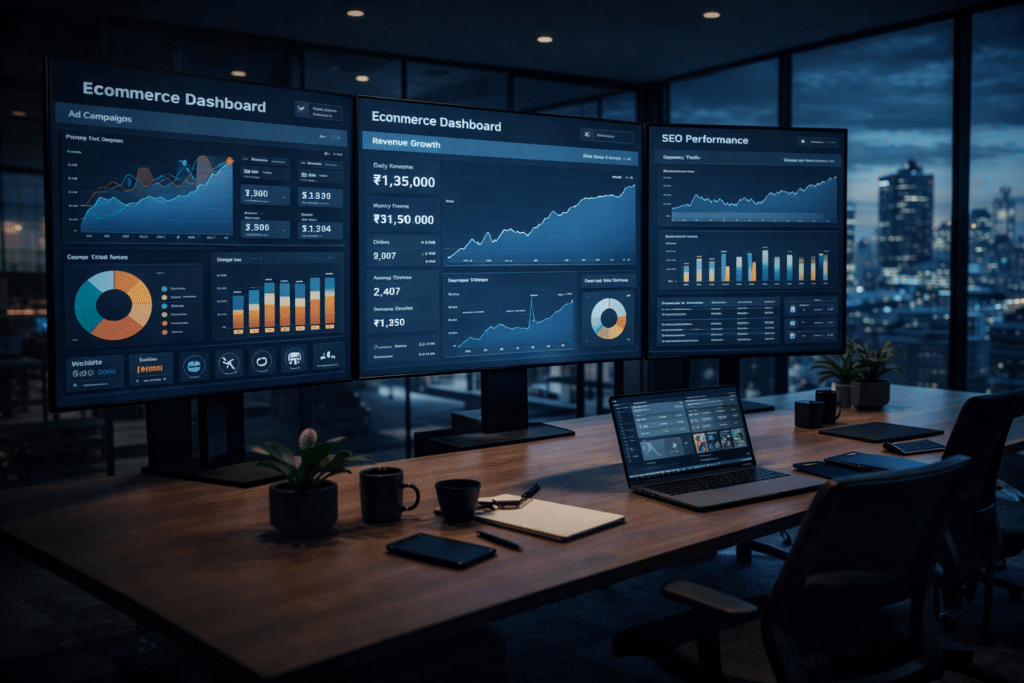
India’s ecommerce ecosystem is expanding at a pace few markets globally can match. With rising internet penetration, digital payments adoption, and mobile-first consumers, brands now have unprecedented opportunities to grow. Yet scaling is not just about increasing ad spend or launching new products. Understanding how to scale ecommerce brand in india requires a structured mix of acquisition, retention, brand authority, and operational efficiency.
Businesses that master how to scale ecommerce brand in india focus on predictable growth systems rather than short bursts of performance. According to India’s ecommerce market is projected to surpass $200 billion by 2027, making competition more intense and strategic clarity more important than ever.
This guide explains what scaling truly means and how growth-focused brands approach it strategically.
What is How to Scale Ecommerce Brand in India?
Understanding how to scale ecommerce brand in india means building sustainable growth instead of chasing short-term spikes. Scaling involves increasing revenue without proportionally increasing costs while improving operational efficiency and brand authority.
Brands that scale successfully focus on strong conversion rate optimization, structured performance marketing, and consistent social media marketing aligned with long-term SEO visibility. Scaling is not just about acquiring customers but maximizing lifetime value.
According to <a href=”https://blog.hubspot.com/marketing/ecommerce-marketing” rel=”dofollow”>HubSpot</a>, returning customers spend 67% more than new ones, highlighting the importance of retention alongside acquisition.
Why Businesses Need How to Scale Ecommerce Brand in India in 2025
The ecommerce landscape in India is evolving rapidly. Customer acquisition costs are rising across platforms like Meta and Google. Organic visibility is becoming critical to offset ad dependency.
Businesses exploring how to scale ecommerce brand in india must integrate paid ads with organic SEO and brand authority. Growth today depends on combining SEO services India with paid acquisition channels rather than relying on one approach.
India has over 900 million internet users, but attention is fragmented. Brands must appear across search, social, marketplaces, and remarketing funnels to remain visible.
Scaling also reduces reliance on discounting. Brands with strong positioning can maintain margins while growing revenue.
Strategic Framework That Drives Real ROI
Scaling requires a layered framework.
The first layer is acquisition efficiency. Paid campaigns should focus on data-driven audience segmentation rather than broad targeting. Brands investing in performance marketing services gain better CAC control through automation and predictive analytics.
The second layer is organic authority. SEO-driven product pages, category pages, and blog ecosystems create compounding growth. Structured content targeting transactional keywords strengthens discoverability.
The third layer is conversion optimization. Website speed, UX clarity, trust signals, and checkout simplicity significantly influence revenue. According to , page experience remains a ranking and conversion factor.
The fourth layer is retention and repeat purchase strategy. Email automation, loyalty programs, WhatsApp marketing, and remarketing increase lifetime value.
The fifth layer is brand building. Consistent storytelling through social media marketing strengthens recall and reduces dependency on paid ads.
Mastering how to scale ecommerce brand in india depends on balancing all these layers instead of focusing on a single tactic.
Common Mistakes Businesses Make
Many ecommerce brands attempt scaling by simply increasing ad budgets. Without funnel optimization, higher budgets only amplify inefficiencies.
Another mistake is ignoring SEO. Paid ads generate immediate traffic, but organic rankings create sustainable acquisition.
Some brands launch too many SKUs without demand validation. This dilutes marketing focus and inventory management.
Others underestimate retention. Acquisition without retention inflates CAC and reduces profitability.
Businesses also overlook analytics. Decisions based on assumptions rather than data slow down scaling.
Avoiding these mistakes is essential when learning how to scale ecommerce brand in india effectively.
Future Trends in How to Scale Ecommerce Brand in India
AI-driven personalization will define the next phase of ecommerce growth. Predictive product recommendations and automated creative testing will improve performance.
Voice search and conversational commerce will increase product discovery channels. Brands must optimize content accordingly.
Video commerce is becoming dominant. Short-form videos influence purchase decisions faster than static creatives.
Marketplace and D2C hybrid strategies will grow. Brands that control their audience data perform better long term.
Automation tools will reduce manual campaign optimization. Businesses adopting conversion rate optimization alongside AI analytics will gain advantage.
Understanding future patterns helps businesses stay ahead while implementing how to scale ecommerce brand in india strategically.
Why AI Marketing Lab is Different
AI Marketing Lab approaches ecommerce scaling through integrated growth systems rather than isolated services.
We combine SEO authority building, performance marketing intelligence, conversion optimization, and analytics dashboards into one ecosystem.
Our approach ensures acquisition costs decrease while revenue grows.
We analyze customer journeys, optimize creatives, build organic visibility, and automate retention funnels.
Unlike generic agencies, we focus on measurable ROI rather than vanity metrics.
Brands partnering with AI Marketing Lab don’t just grow. They scale sustainably.
Conclusion
Scaling ecommerce in India requires clarity, discipline, and integrated execution. Growth is no longer about spending more. It is about spending smarter while building authority.
Understanding how to scale ecommerce brand in india is about aligning acquisition, retention, brand positioning, and analytics into one cohesive strategy.
If you want predictable ecommerce growth instead of inconsistent spikes, AI Marketing Lab can help you build a scalable ecosystem that drives real revenue.
Your growth should be engineered, not guessed.