INTRODUCTION
A shop owner in Madhapur once told us he’d spent two years and a fair chunk of his savings on newspaper ads and pamphlets, and could barely name a single new customer who walked in because of them. That conversation is the reason this article exists. If you’ve ever typed “what is digital marketing” into Google late at night, wondering whether it’s worth your time and money, you’re not alone — thousands of Indian business owners ask that exact question every month.
The short answer is that digital marketing is simply meeting your customers where they already spend their time: on Google, Instagram, WhatsApp, and their inbox. But understanding what is digital marketing in a way that actually helps your business takes a bit more than a one-line definition. So let’s slow down and walk through it properly — what it means, the different forms it takes, why it works, and how a complete beginner can get started without wasting a single rupee.
What Is Digital Marketing? A Simple Definition
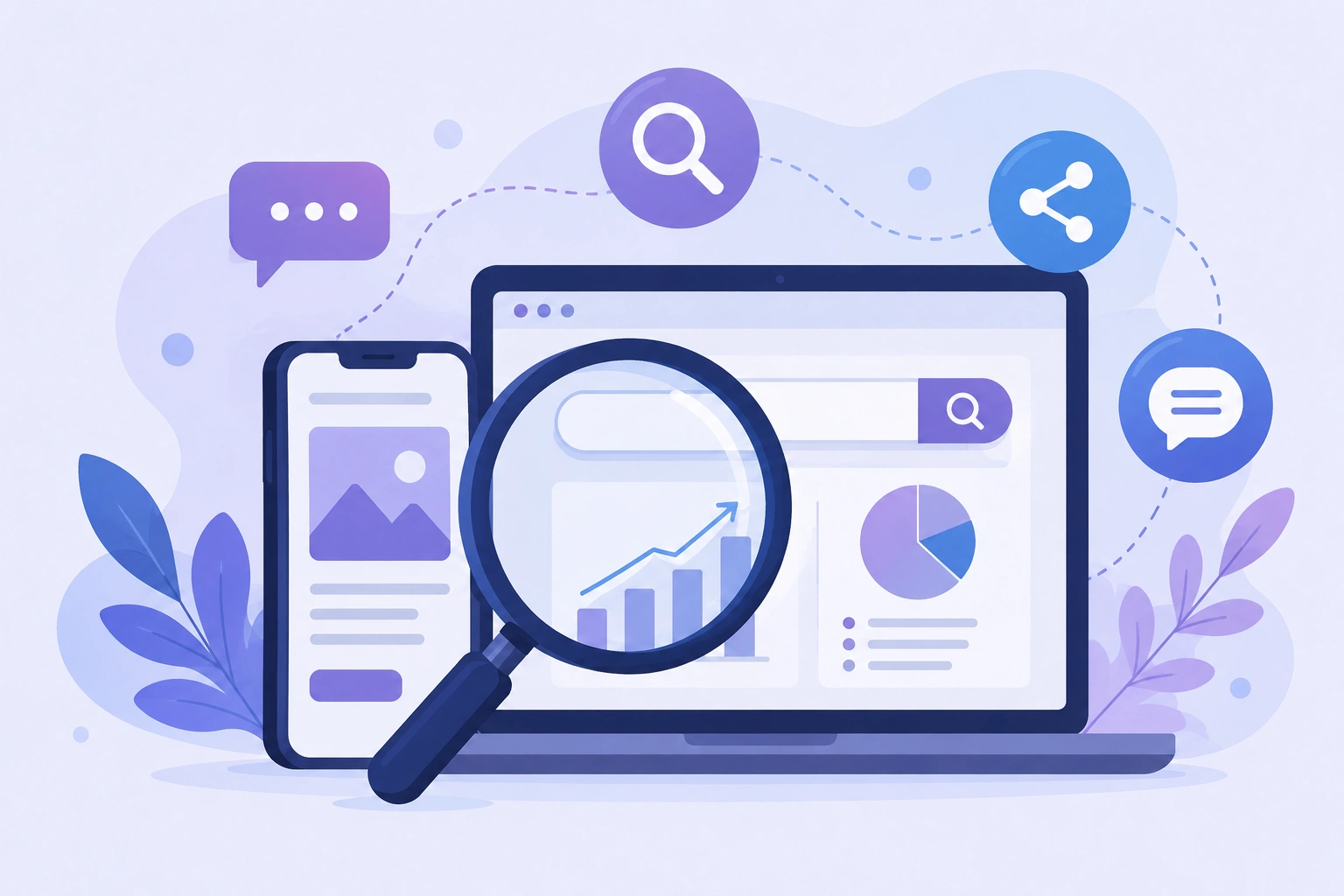
At its core, what is digital marketing comes down to one idea: promoting a product, service, or brand using the internet instead of (or alongside) traditional channels like print, TV, or hoardings. It covers everything from a Google search ad to an Instagram reel to a well-written email that lands in someone’s inbox at just the right moment.
According to Wikipedia’s overview of digital marketing, the term broadly refers to marketing delivered through digital channels such as search engines, websites, social media, email, and mobile apps — which lines up with how we explain it to clients every week. The part people often miss when they ask what is digital marketing is that it isn’t one single activity. It’s a collection of channels working together, and a business rarely needs all of them at once.
For a India boutique or a Vizag home bakery, digital marketing might mean nothing more than a well-optimized Google Business Profile and a consistent Instagram page. For a growing SaaS company, it might mean paid ads, email funnels, and search engine optimization running in parallel. The scale changes. The underlying principle doesn’t.
Types of Digital Marketing Explained
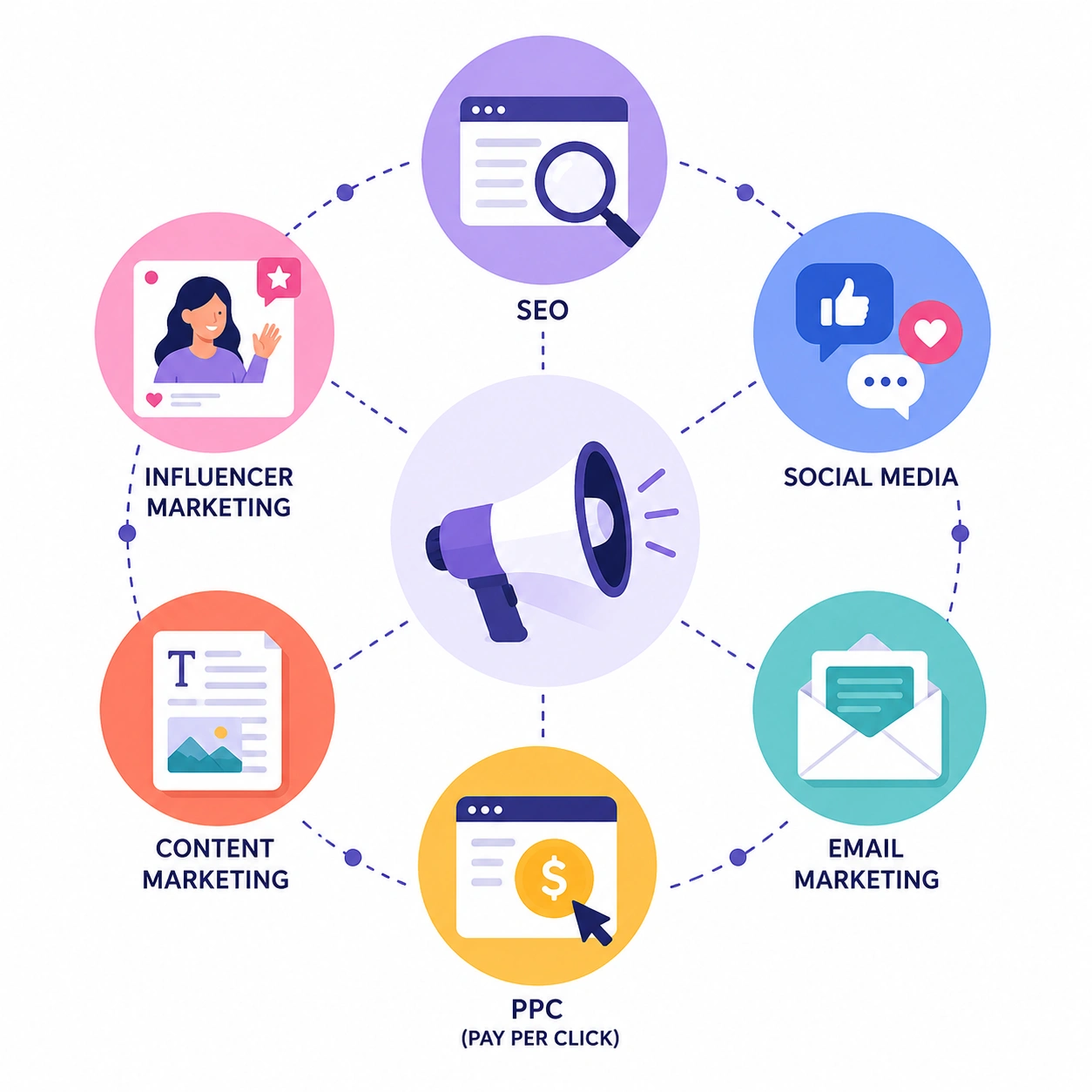
Once the definition is clear, the natural next question is what the types of digital marketing actually look like in practice. Here are the six you’ll run into most often:
- Search Engine Optimization (SEO) — improving your website so it ranks higher when someone searches for what you sell. If you want the technical side explained properly, Wikipedia’s page on search engine optimization is a solid starting point, though we’d recommend pairing it with a tool built for your market.
- Social Media Marketing — building a presence and running campaigns on Instagram, Facebook, or LinkedIn depending on where your audience actually is.
- Pay-Per-Click (PPC) Advertising — paying for visibility on Google or social platforms, where you’re charged only when someone clicks.
- Email Marketing — one of the oldest of the types of digital marketing, and still one of the highest-ROI channels when done with a clear list and a clear offer.
- Content Marketing — blogs, videos, and guides (like this one) that answer real questions your customers are already asking.
- Influencer Marketing — partnering with creators who already have your audience’s trust.
Most businesses don’t need every one of these types of digital marketing running at once — and honestly, trying to do all six with a small team is how most beginners burn out in month one. Picking two or three that fit your budget and your customer’s habits usually beats spreading yourself thin. Choosing the right mix often comes down to the right AI marketing tools that help you track what’s actually working before you scale spend on any single channel.
Benefits of Digital Marketing for Indian Businesses
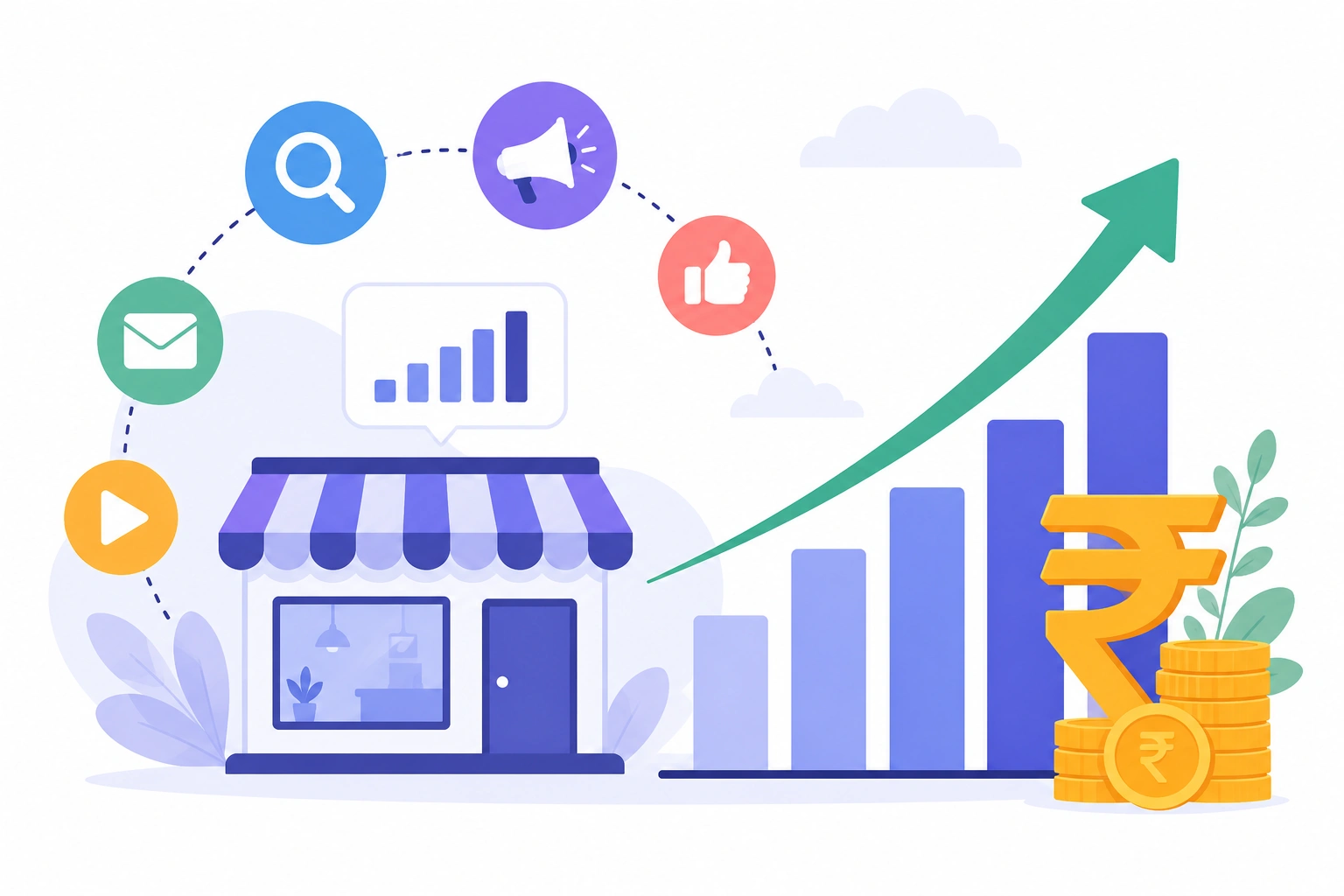
The benefits of digital marketing are the reason it’s overtaken traditional advertising for most small and mid-sized Indian businesses, and it’s worth being specific about why.
Cost. A newspaper ad in a regional daily can cost more than a month of well-run Instagram ads that reach a far more targeted audience. That gap alone is one of the clearest benefits of digital marketing for anyone working with a limited budget.
Targeting. You can show your ad only to women aged 25–40 living within 5 kilometres of your store who’ve shown interest in fashion — something print or television simply can’t do.
Measurability. With traditional marketing, you’re mostly guessing at what worked. With digital marketing, you can see exactly how many people saw your ad, clicked it, and bought something. That level of clarity is genuinely one of the underrated benefits of digital marketing, especially for a founder trying to justify every rupee spent.
Speed. A campaign can go live in an afternoon and start generating leads by evening — no printing, no waiting for the next newspaper cycle.
None of this means traditional marketing is dead. A well-placed hoarding still works for certain businesses. But for most companies asking what is digital marketing can do for them that older channels can’t, the honest answer is: faster feedback, tighter targeting, and a lot more control over the outcome.
Digital Marketing for Beginners — Where to Start
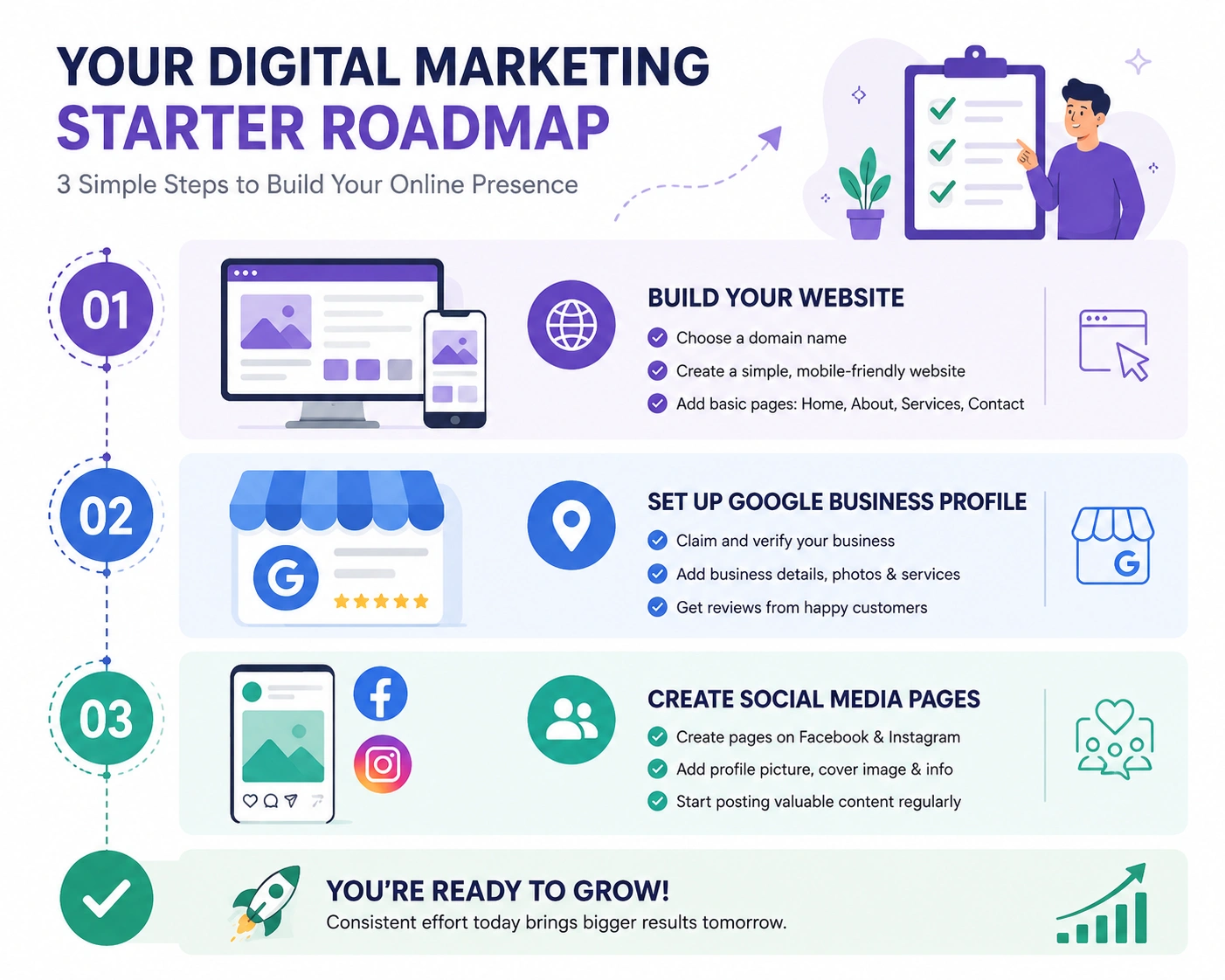
If you’re completely new to this, digital marketing for beginners doesn’t need to start with a five-figure ad budget or a marketing degree. It starts with three things, in this order:
- A simple, fast-loading website. Not a fancy one — just something that clearly says what you do and how to contact you.
- A claimed and optimized Google Business Profile. This is the single highest-leverage step in digital marketing for beginners, especially for anyone running a local business, because it’s free and it’s where most “near me” searches land.
- One social media platform, chosen deliberately. Not five platforms posted badly — one platform posted consistently, chosen based on where your actual customers spend time.
Only after these three are in place does it make sense to think about paid ads or SEO content. Rushing into paid campaigns before your foundation is solid is the most common (and most expensive) mistake we see. If you want a fuller roadmap once the basics are covered, a practical growth strategy is the natural next read — it picks up exactly where digital marketing for beginners leaves off.
Common Mistakes Businesses Make (And How to Avoid Them)
Even after understanding what is digital marketing on paper, a lot of businesses trip over the same handful of mistakes:
- Trying every channel at once. Spreading a small budget across six types of digital marketing usually means none of them get enough attention to actually work. digital marketing.
- Ignoring the data. The whole point of digital marketing is that it’s measurable — yet many businesses never check what’s converting and what’s just burning budget.
- Copying competitors blindly. What works for one brand’s audience won’t automatically work for yours.
- Treating it as a one-time project. The benefits of digital marketing compound over months, not days. A single campaign rarely tells the full story.
This is also where a lot of businesses start exploring newer tools — how AI is changing marketing is worth a read if you want to understand where the space is heading beyond the basics covered here.
A Real-World Example
Consider a small home-décor brand in Vizag that started with just an Instagram page and a Google Business Profile — no ad spend for the first two months. By month three, once they understood which posts actually drove enquiries, they added a modest PPC budget aimed only at their best-performing product category. Within six months, online enquiries had overtaken walk-ins for the first time. Nothing about that story required a huge budget. It required understanding digital marketing for beginners well enough to sequence the right steps in the right order, and being patient enough to let the data guide the next move.
Conclusion
So, what is digital marketing, really? It’s not a single tool or a trendy buzzword — it’s the practical work of reaching your customers wherever they already are online, using whichever mix of channels fits your business and your budget. Understanding the types of digital marketing available, being clear-eyed about the benefits of digital marketing, and starting with the fundamentals rather than jumping straight to paid ads is what separates businesses that see real results from ones that burn budget and give up after a month.
If you’re still figuring out where to begin, that’s exactly what we help with every day. Explore AI Marketing Lab’s digital marketing services or book a free strategy call, and we’ll map out a plan built around where your business actually is right now.
FAQS